

On Wednesday I wrote that the app was in review and had not moved. It has moved. About half of it.
The latlng.io Android app is on Google Play. The listing calls it a first release; we are calling it a beta. Here it is. I have opened that link more often than is reasonable, and it works every time, which has not stopped me checking.
Exceptional cases
Both apps were submitted on 12 October. Google’s own guidance says that for certain developer accounts a review can take up to seven days, or longer in exceptional cases. Exceptional cases exist. Two apps, two queues, and no window into either. Google has now let it through. The listing is public, the button says Install, and nobody has to be invited.
A release, it turns out, is a medical event. You cannot push. You cannot hurry it along by sitting differently. You eat more fibre. You drink water. You sit there reading the back of the shampoo bottle, telling yourself it is nearly time, and it is not nearly time, and the bottle says the same thing it said yesterday.
You also stop mentioning it at dinner, and then find you are discussing nothing else.
Google went. Apple is still sitting there.
On Wednesday I listed the jobs that surround a release and have nothing to do with whether the app works: screenshots for device sizes I have never held, six icon appearances I cannot preview, a privacy policy that will be opened by almost nobody. None of them get smaller for Google, and that is still what shipping looks like.
What came out
The app does what latlng.io has always done, on a phone: your GPS positions on a map, as they happen. Positions are streamed to the client over websockets, so the dot moves when the tracker moves, and it moves without you pressing anything. It takes a tracker you already have — an Arduino, your own hardware, or a commercial device — over the protocols and formats listed on the site. You can share a live view with someone else. There is a documented REST API if you want to build against it. It is free, as every latlng client is free, and support runs through the community forum. The listing says setup takes five minutes.
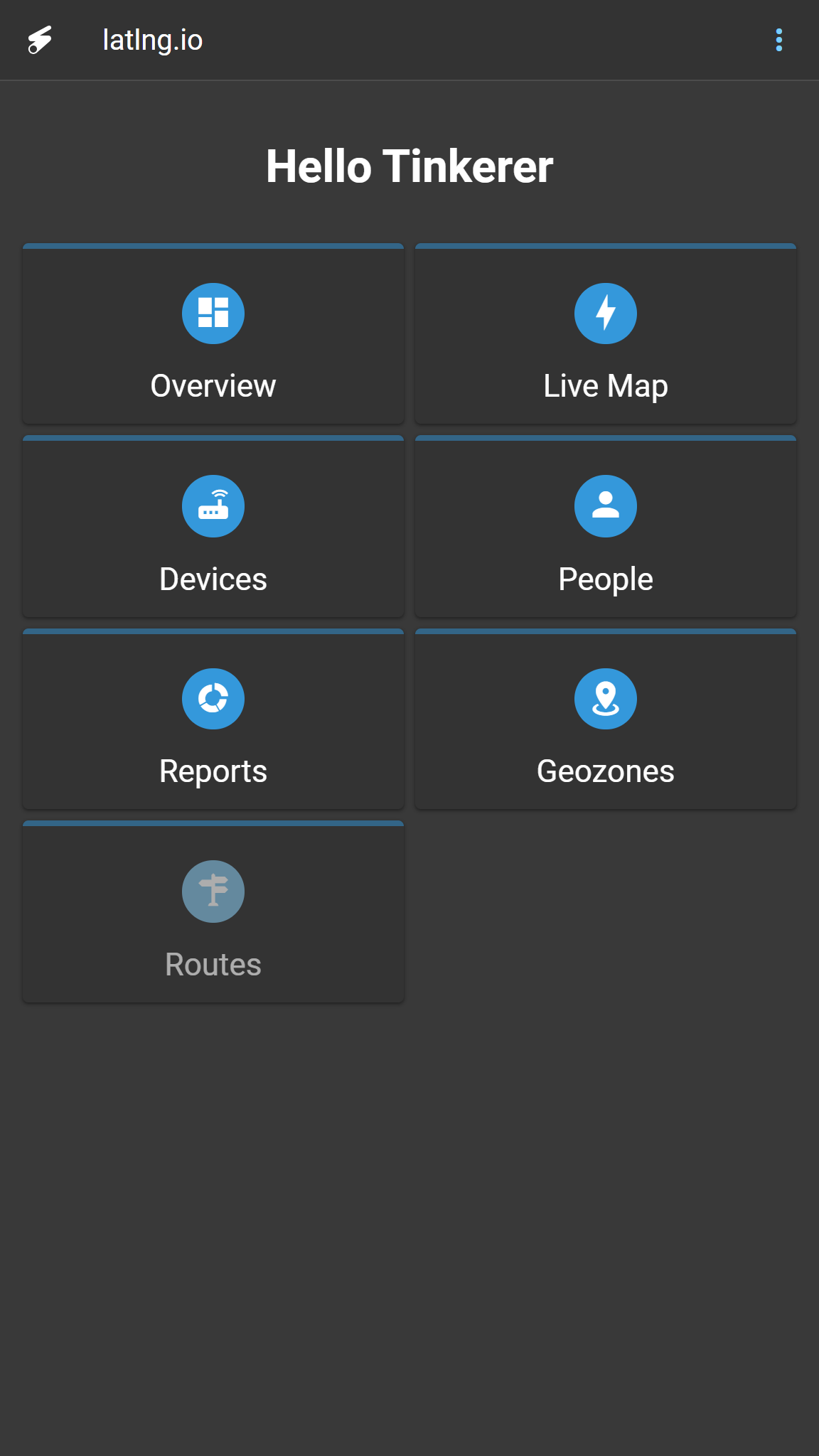
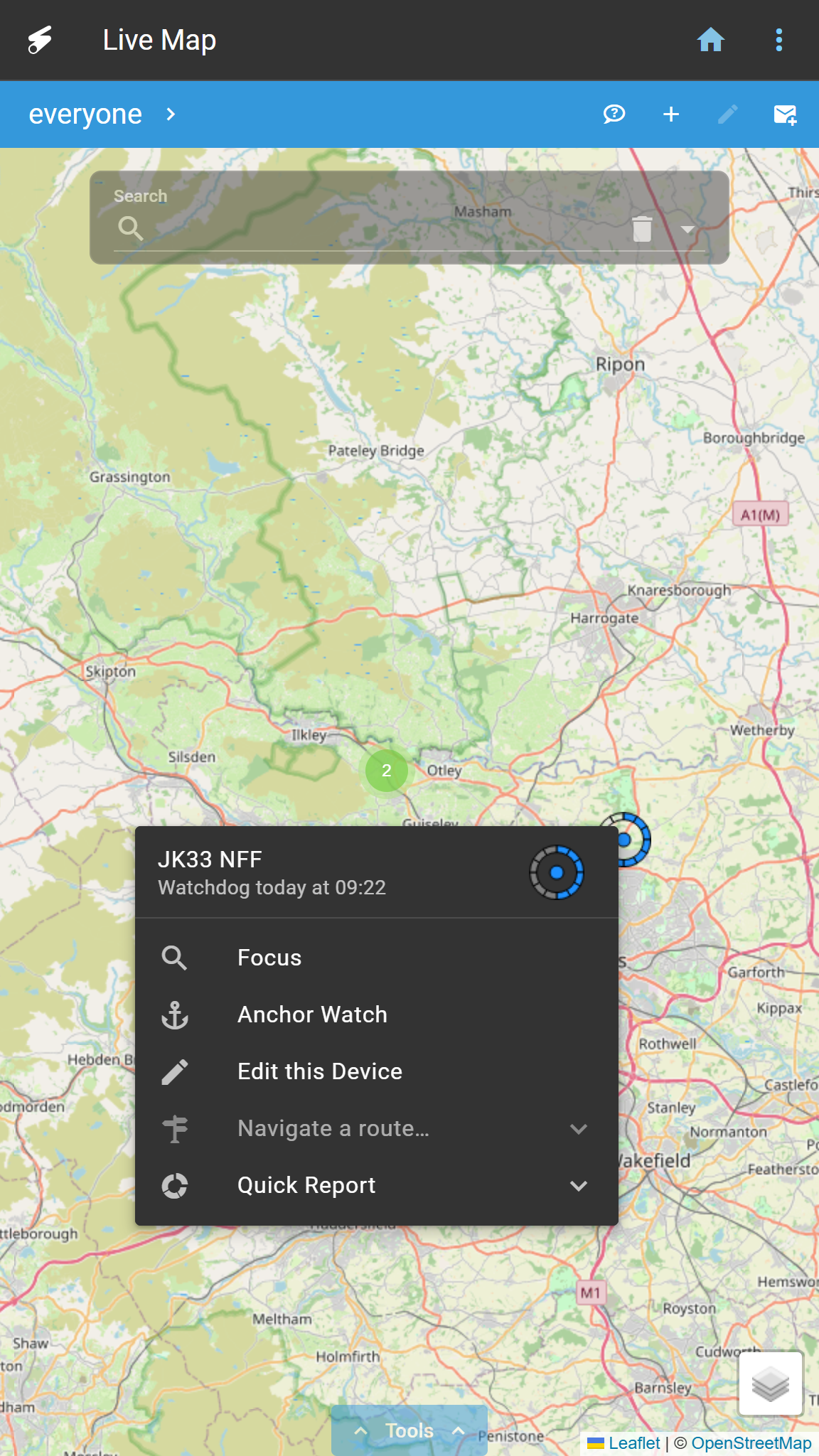
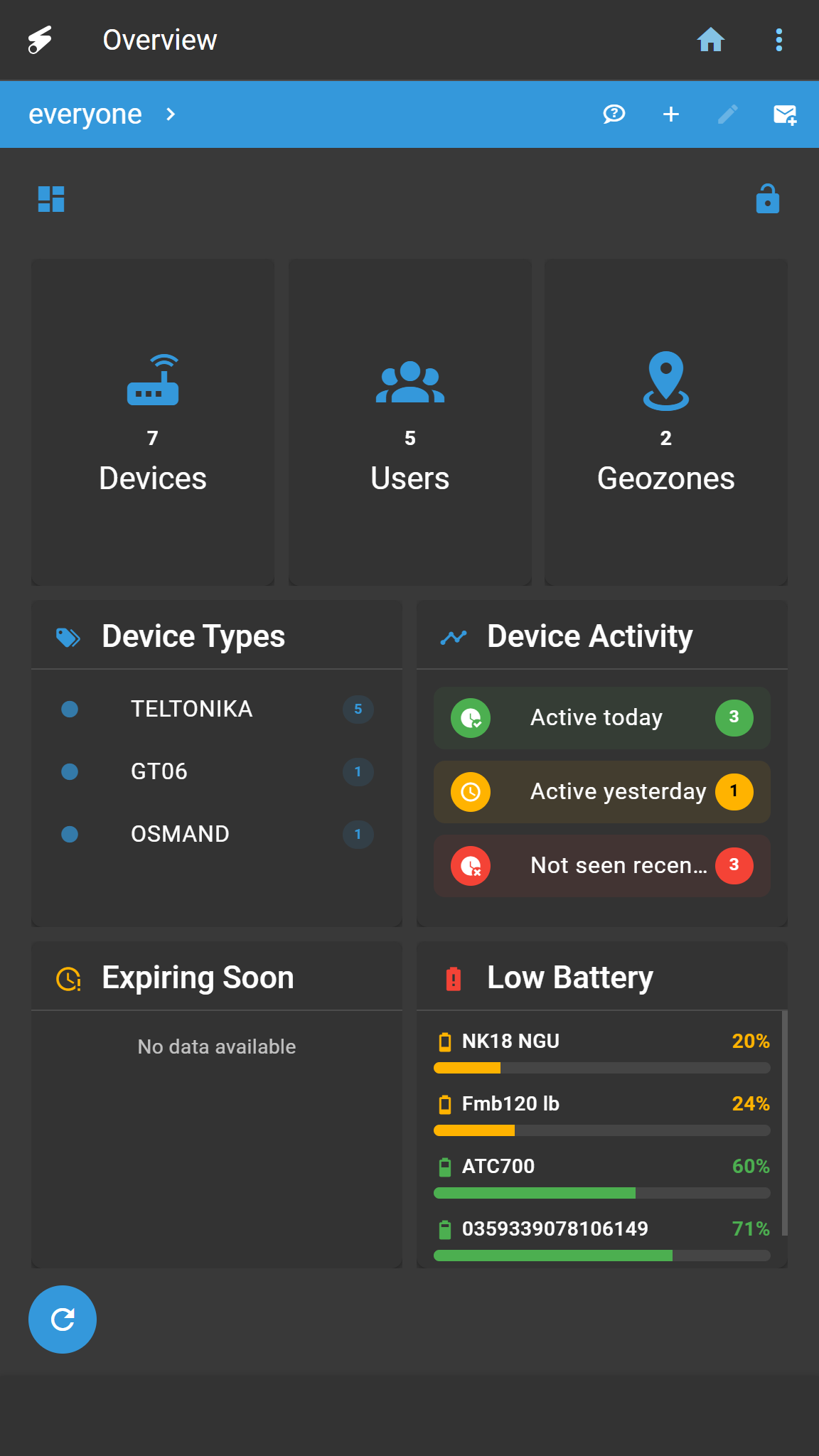
That is the app: a home screen with Overview, Live Map, Devices, People, Reports and Geozones, a live map with one device open, and a dashboard counting devices, users and geozones. Routes sits in the grid, greyed out.
The FAQs are clear about what free means: little or no support beyond the forum, no uptime guarantee, and data purging and API throttling when you lean on it. That is a fair trade, and it is written down, which is rarer than it should be.
To use it:
- Sign up, then log in on the app.
- Already have a tracker? Point it at latlng and watch the dot arrive.
- Building your own? Start here. Writing code against it? The API is documented.
It is a beta by our own description, so something will break, possibly on the first launch, possibly in a way I have not imagined. When it does, say so in the forum. Read the FAQs first if you like, then say so in the forum. If you have an Android phone, install it.
The other half
The iPhone app is still with Apple. Apple says it reviews at least half of submissions within 24 hours and nine in ten within 48. We are at twelve days. I cannot see the queue, so I refresh the page, which is the only part of this I control.
I have considered prunes. I have not ruled them out.
Until then, iPhone users have the web client, which works, and which no store has to approve. It is not a consolation prize; it is the thing that has been working all along. I will write again when Apple moves.